About Flotation Cell/Deinking Cell
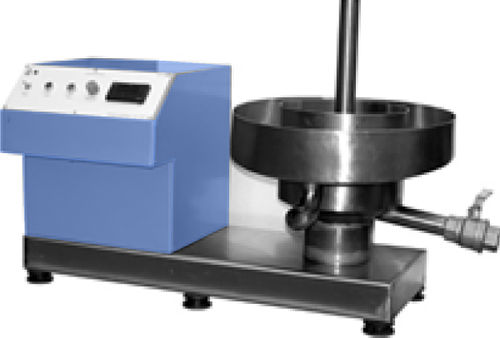
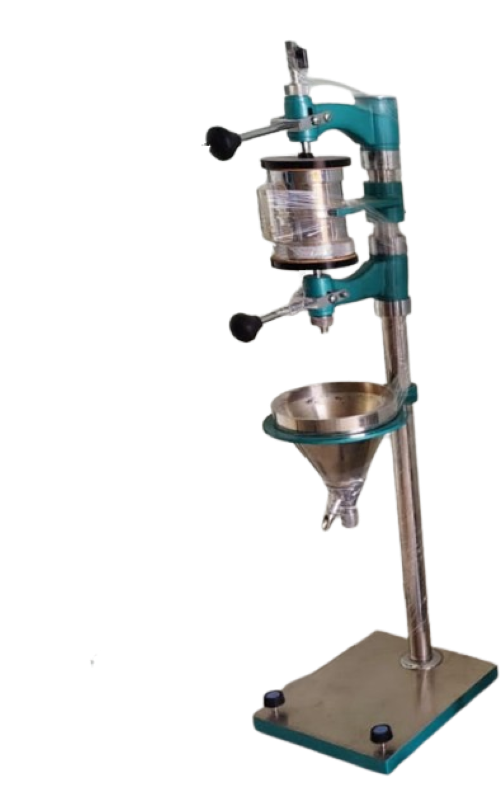
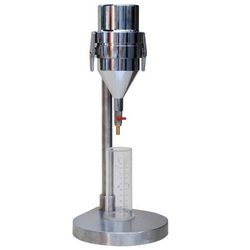
This instrument is used to study the deinking effect of printed recycled paper by floatation method in laboratory. Stainless steel container capacity 25-liter specially designed aerator with variable speed and digital revolution counter. Can be used in conjunction with laboratory pulper and screw press to conduct extensive testing of recycled fiber system.
Product Details:
| Minimum Order Quantity | 1 Piece |
| Brand | Pap-Tech |
| Container Capacity | 25 liter Stainless steel container with outlet Valve |
| Drive | DC Variable Drive |
| Revolution counter | 6 Digit Digital Revolution counter |
| Material Suitable feed size | 300 microns |
| LCD Digital Display | Not Required |
| Speed adjustment of Impeller | Two Stage Speed Adjustment |
| Froth Removal Paddle | Two Speed Froth Removal Paddle |
| Liquid Level | Adjustable |
| Water Make up Device | Included |
Efficient and Reliable Laboratory TestingEngineered for use in libraries and industrial laboratories, this Deinking Cell delivers accurate and repeatable results for recycled paper testing. Its precise control panel and variable agitator speeds (700-1500 rpm) allow adjustments according to specific process requirements. Optimal flotation cell design ensures excellent deinking performance, supported by a compact structure suitable for limited bench space.
Robust Construction & User-Friendly OperationManufactured with SS304 stainless steel and high-grade engineering plastics, the flotation cell stands up to corrosive pulp environments. Detachable components make routine maintenance and cleaning both quick and straightforward. An intuitive push-button/LCD interface enables both automatic and manual control, ensuring accessibility for users at all experience levels.
FAQ's of Flotation Cell/Deinking Cell:
Q: How is the flotation process carried out with this Deinking Cell?
A: The flotation process uses a mechanical agitator for thorough mixing of pulp at a recommended consistency of 0.5%-1.5%. Air is introduced and foam is manually discharged, separating inks and contaminants from paper fibers. The digital/analog panel provides real-time operation and parameter adjustments.
Q: What materials are used in the construction of this flotation cell?
A: The cell is constructed from SS304 stainless steel and engineering plastic, offering high corrosion resistance and strength. These materials ensure longevity and reliability, even in demanding laboratory environments.
Q: When should cleaning and maintenance of the equipment be performed?
A: It is advisable to clean the flotation cell after every batch to maintain accuracy and prevent residue build-up. The detachable parts are designed for easy disassembly, making the process swift and user-friendly.
Q: Where can this flotation cell be installed and used?
A: This bench-top unit is ideal for laboratory settings in libraries, research institutes, paper mills, and academic environments. Its compact design (600 x 300 x 480 mm) means it fits conveniently on standard lab benches.
Q: What are the main benefits of using this equipment for paper pulp deinking?
A: The device offers reliable, repeatable results, helps comply with TAPPI and ISO standards, and optimizes deinking efficiency. Its easy operation, compact build, and safety features make it an excellent tool for research and quality control.
Q: How does the safety system work in this flotation cell?
A: Safety features include overload protection and ground fault protection to safeguard both the user and equipment during operation. These systems automatically engage at risk thresholds, preventing damage or hazards.
Q: What types of specimens can be processed with this flotation cell?
A: It is suitable for processing up to 3 liters of pulp suspension per batch, accommodating a range of recycled paper samples for laboratory deinking and flotation studies.


 Opening Hours - Mon to Sat: 9 AM to 7PM
  Call Us : 08045477961








 Send Inquiry

 Send Inquiry
 Send Inquiry
 Send SMS
 Call Me Free