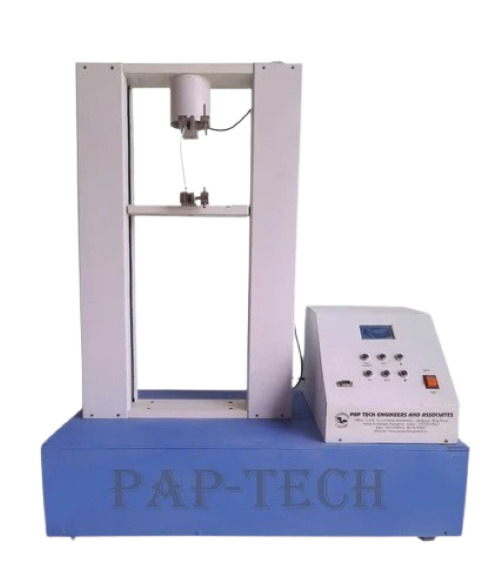
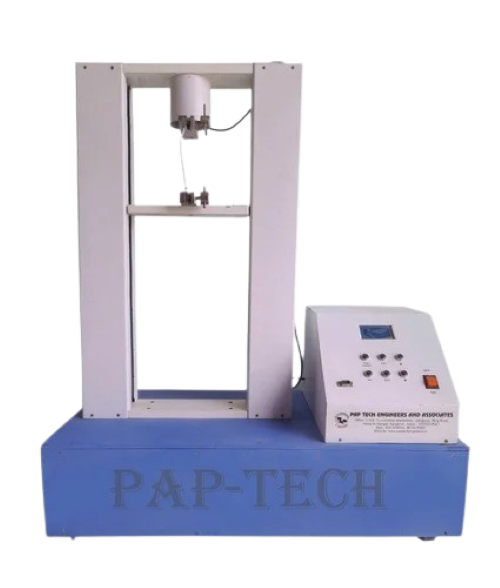
About Paper Tensile Strength Tester (Vertical Model)
|
The Microprocessor Based Tensile Strength Tester is used for determining the tensile strength and stretch of sheet materials.
Salient Features :
- Standard Stainless Steel clamps for Paper, Strip width 15 mm with non-slip grip.
- Polling rate is regulated through imported DC Drive and imported load cell.
|
Microprocessor-Controlled PrecisionExperience advanced testing accuracy with the Paper Tensile Strength Tester's micro-controller control mode. This feature ensures consistent and reliable measurement of tensile strength and stretch in sheet materials, promoting high-quality standards in your workflow. Suitable for paper and similar substrates, it is a perfect fit for industrial quality labs and manufacturing facilities.
Versatile and User-Friendly DesignEquipped with a test range of 100 cm2, clamp port of 50 mm, and adjustable test speeds from 1 to 99 mm/min, this instrument offers flexibility for various testing requirements. Its off-white color and sturdy build enhance the working environment, making it a practical addition for suppliers, traders, and service providers in the paper industry.
FAQ's of Paper Tensile Strength Tester (Vertical Model):
Q: How do you operate the Paper Tensile Strength Tester (Vertical Model)?
A: To operate the tester, secure the sheet sample between the 50 mm clamps, select your desired test speed (1-99 mm/min) using the micro-controller interface, and initiate the test. The microprocessor manages the testing process for reliable and repeatable results.
Q: What materials can be tested with this machine?
A: This tensile tester is suitable for sheet materials like paper, cardboard, and similar substrates where precise measurement of tensile strength and stretch is required.
Q: When should I conduct a tensile strength test on my samples?
A: Tensile strength testing is recommended during quality control checks, before product dispatch, and at various production stages to ensure materials meet industry standards and withstand necessary mechanical stress.
Q: Where is the ideal location to install this tester in an industrial setup?
A: Install the tester in a clean, stable environment such as a quality control laboratory or close to the production line to facilitate easy testing and minimize sample handling time.
Q: What is the typical process for testing tensile strength with this device?
A: The process involves placing the sample in the clamps, setting the required parameters (test speed, range), and starting the test. The machine stretches the sample until it breaks, measuring the force and elongation.
Q: How does using this tester benefit industrial operations?
A: Implementing this tester ensures consistent material quality, enhances product reliability, and helps meet regulatory standards, ultimately reducing rejection rates and improving customer satisfaction.


 Opening Hours - Mon to Sat: 9 AM to 7PM
  Call Us : 08045477961







 Send Inquiry

 Send Inquiry
 Send Inquiry
 Send SMS
 Call Me Free